

Machine learning is often introduced through algorithms: linear regression, decision trees, neural networks, clustering methods, and so on. But before we can understand why one algorithm works better than another, we need to understand the central object that all of machine learning is built around:
the model.
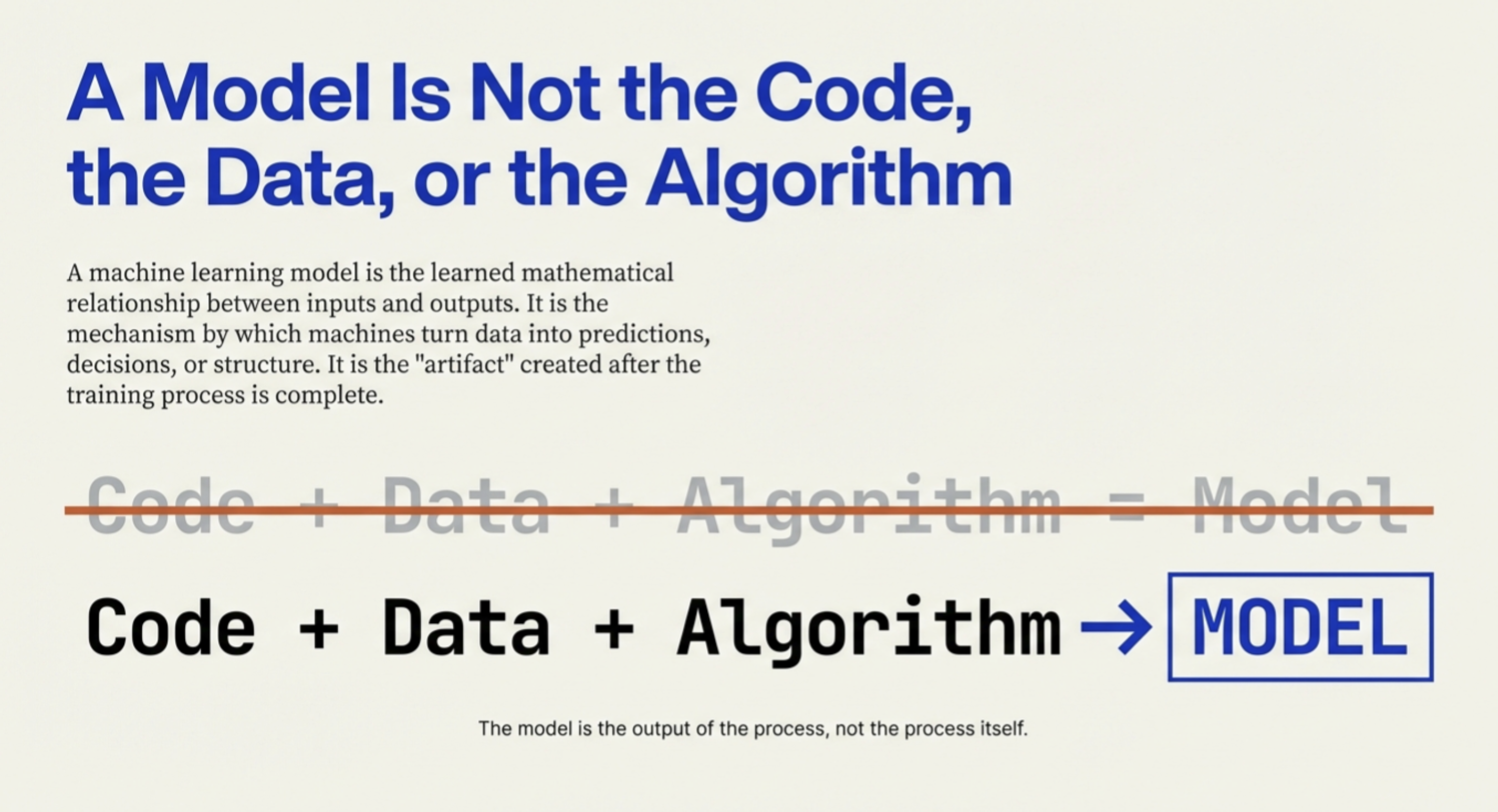
A machine learning model is not simply code, and it is not the dataset itself. It is not even the algorithm. Instead, a model is the learned mathematical relationship between inputs and outputs, the mechanism by which machines turn data into predictions, decisions, or structure.
This chapter introduces the foundational question:
What is a machine learning model, and what role does it play inside real business systems?
We will begin with the simplest definition, then expand into the different kinds of models, the problems they solve, and how organizations use them to create value.
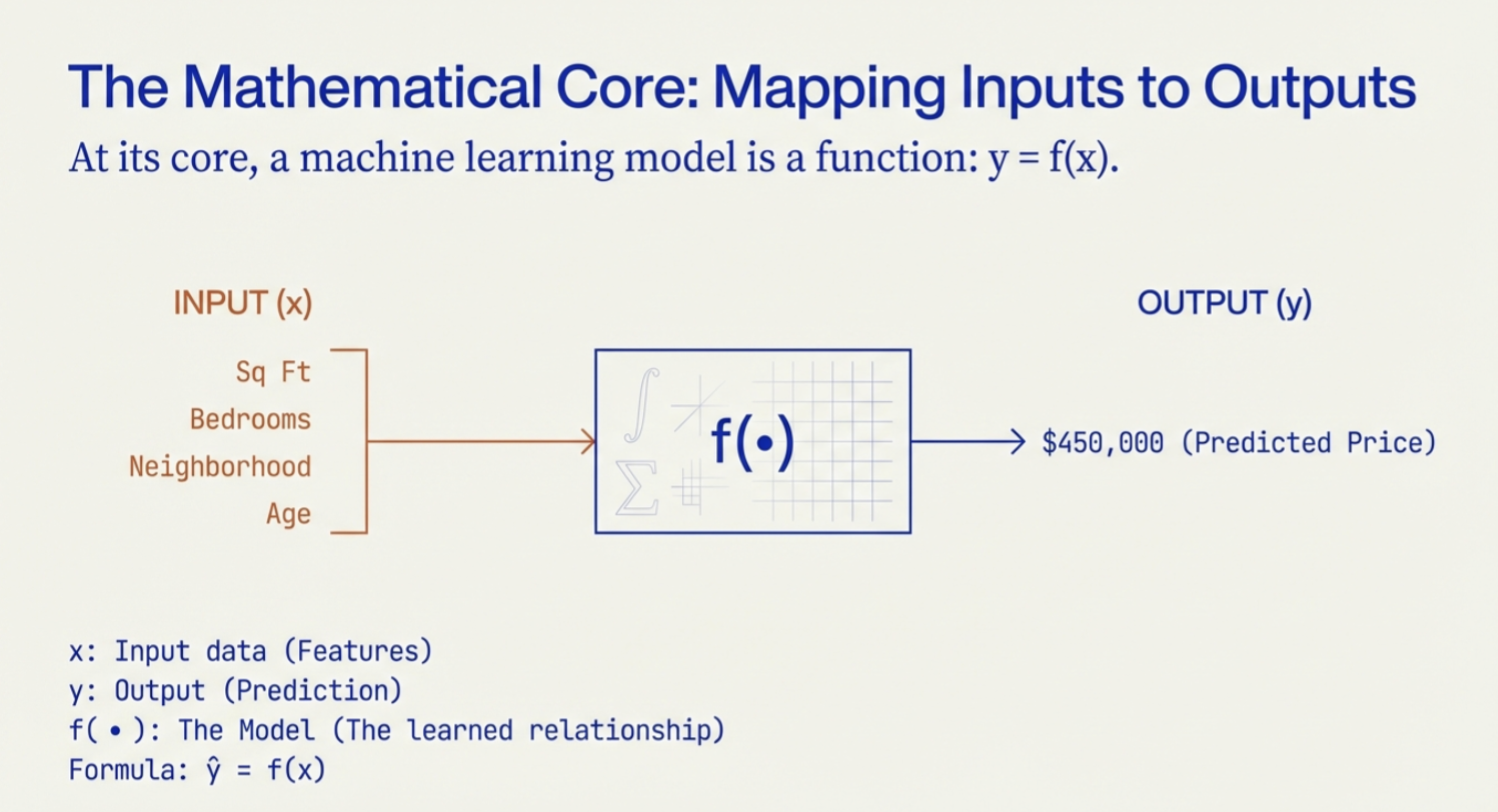
At its core, a machine learning model is a function.
In mathematics, a function maps an input to an output:
y = f(x)
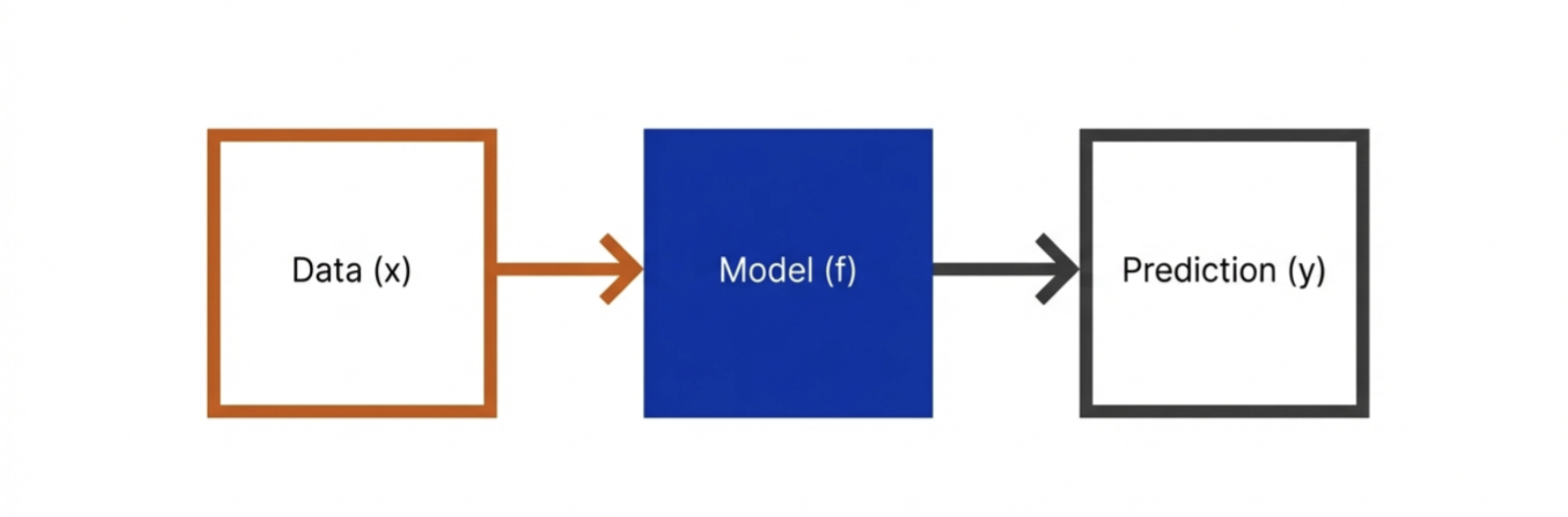
In machine learning, the same idea applies:
So a machine learning model can be written as:
y^ = f(x)
Where:
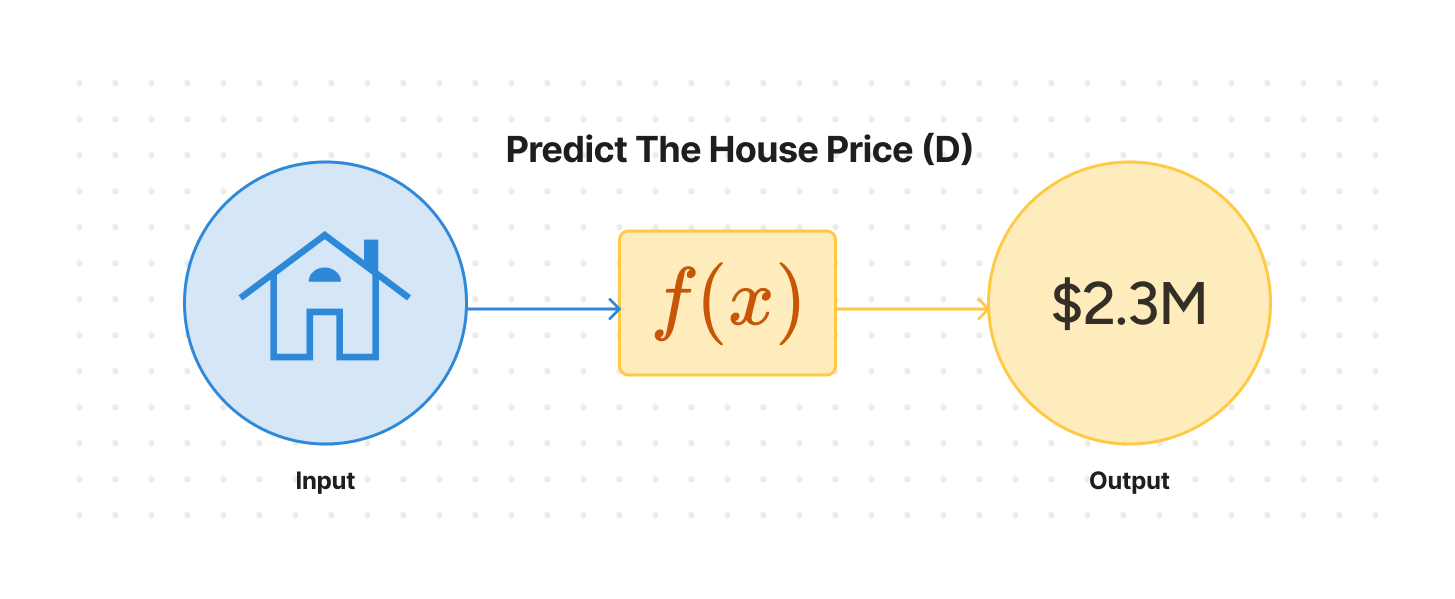
Suppose we want to predict the price of a house.
A model learns a function: Price=f(Size, Bedrooms, Location, Age,… )
Once trained, the model can take a new house it has never seen before and produce a predicted price.
This is the simplest mental model of machine learning:
A model is a learned function that maps inputs to outputs.
Unlike traditional programming, machine learning does not require us to manually write the rules.
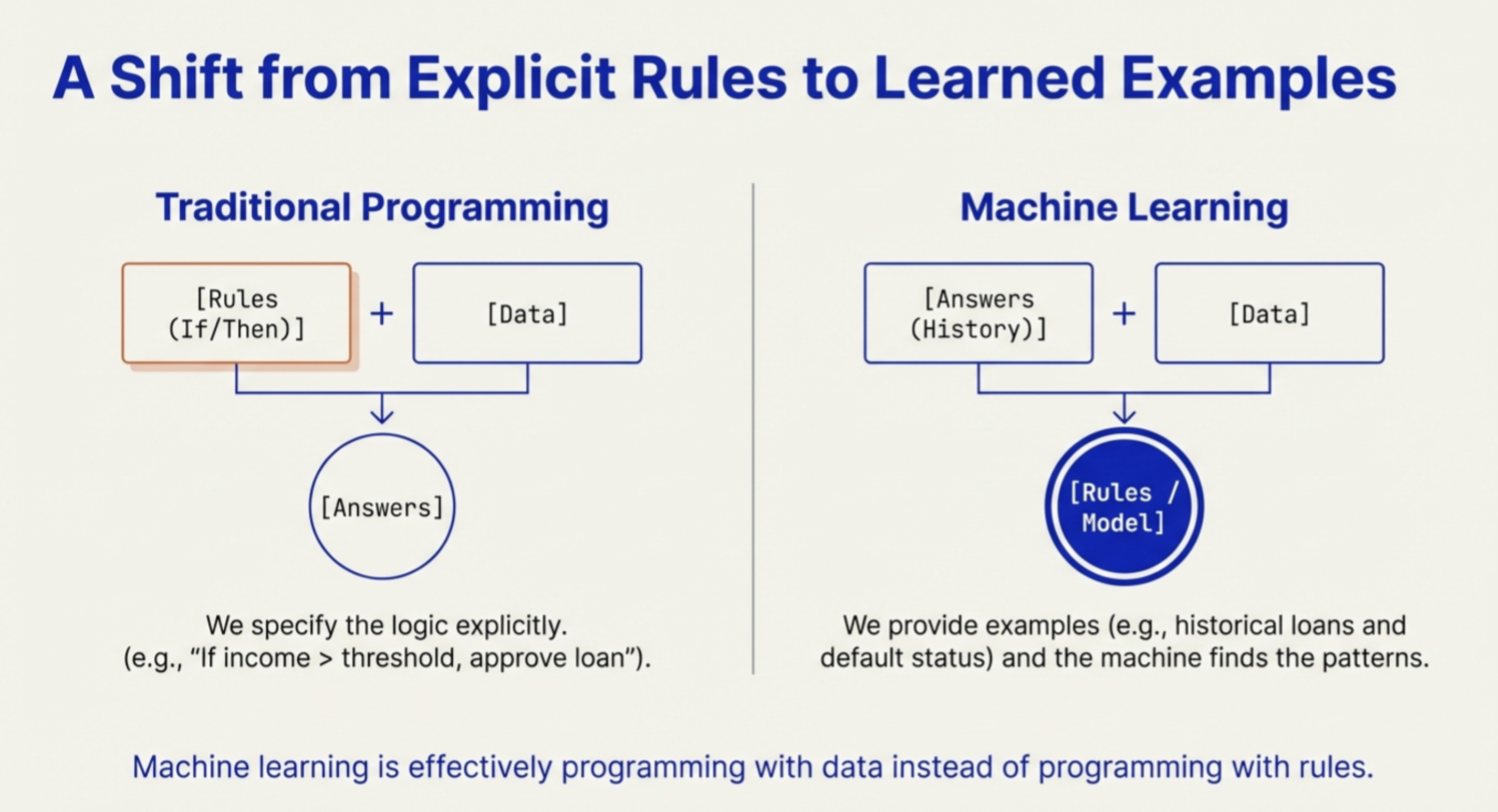
In traditional software, we specify logic explicitly:
Machine learning works differently.
Instead of writing rules, we provide examples:
The model learns the function f(x) by finding patterns in these examples.
This is why machine learning is often described as:
Programming with data instead of programming with rules.
In organizations, machine learning models are built for two broad purposes:
Although these often overlap, they are not the same.
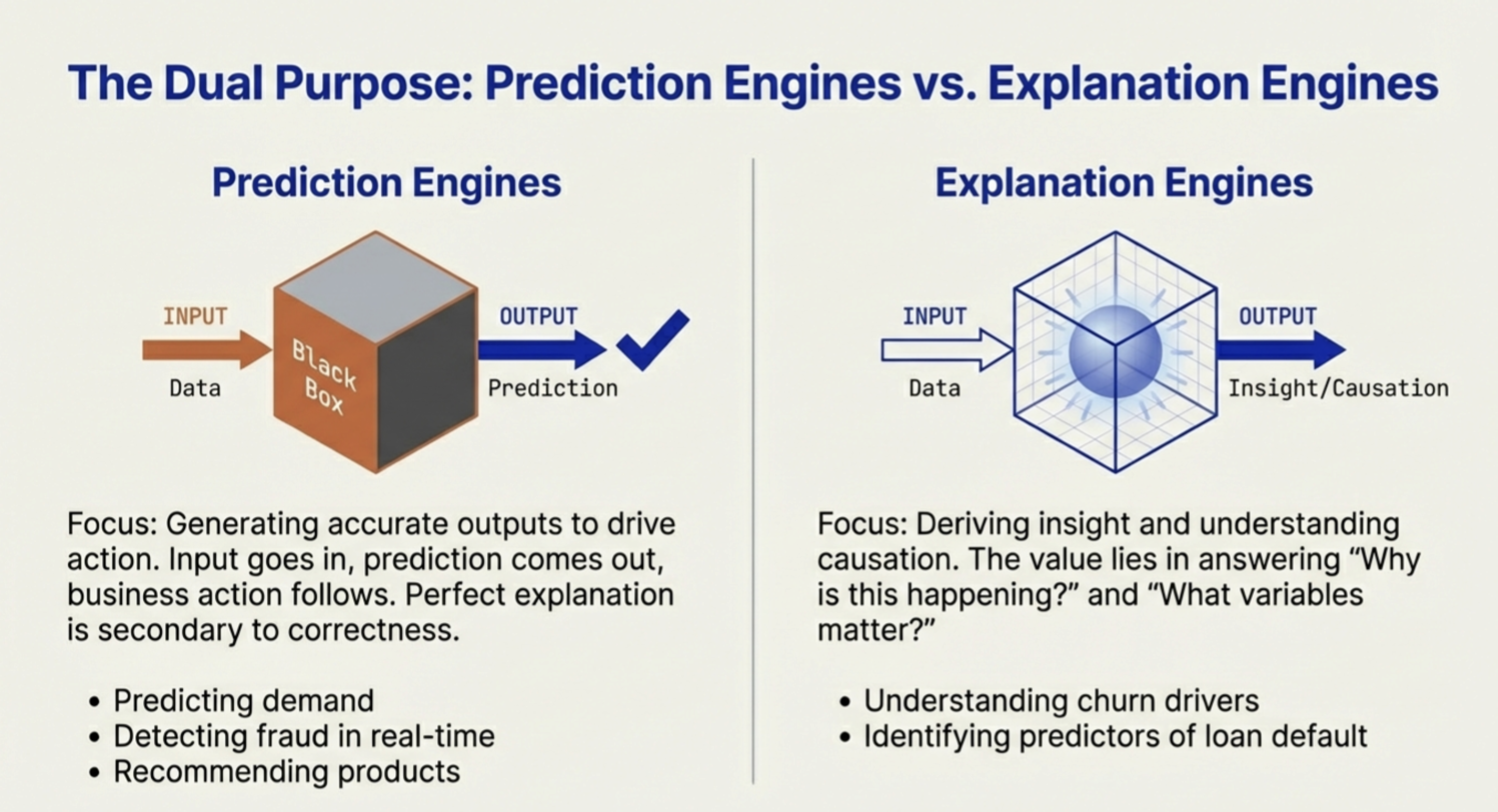
Many models exist primarily to generate accurate predictions.
Examples include:
In these settings, the model is treated as an engine:
Input data goes in, prediction comes out, and business action follows.
The model does not need to explain itself perfectly. It needs to be correct often enough to drive measurable improvement.
Other models are used because organizations want insight, not just output.
Examples include:
In these cases, interpretability becomes essential.
A model is valuable not only because it predicts yyy, but because it helps answer:
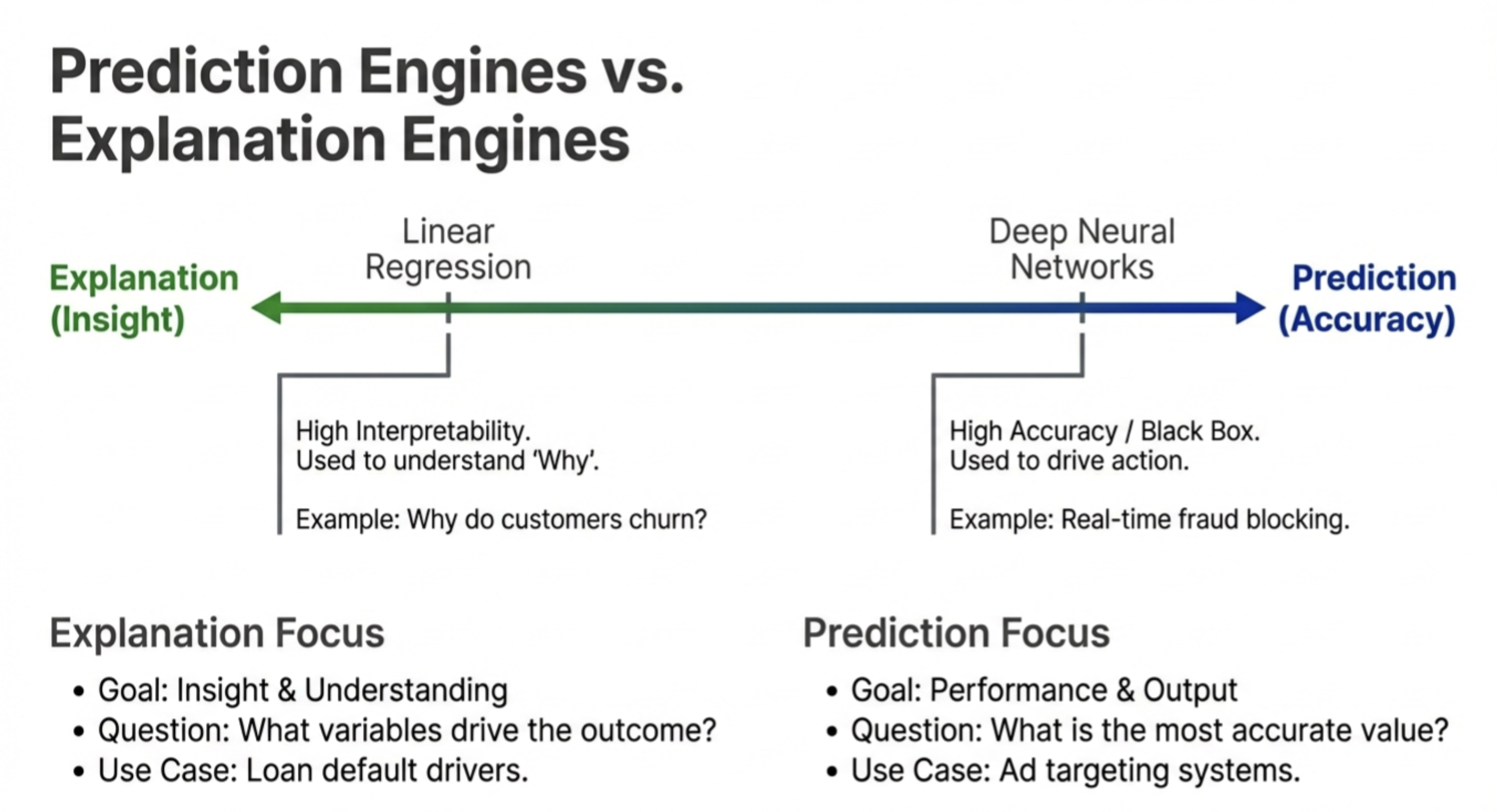
Highly complex models (deep neural networks) may provide strong predictive power but limited interpretability.
Simpler models (linear regression, decision trees) may be easier to explain but less accurate.
Real organizations must choose based on context:
Thus, models are not purely technical artifacts—they are tools embedded in decision environments.
Machine learning models can be grouped by the type of learning problem they solve.
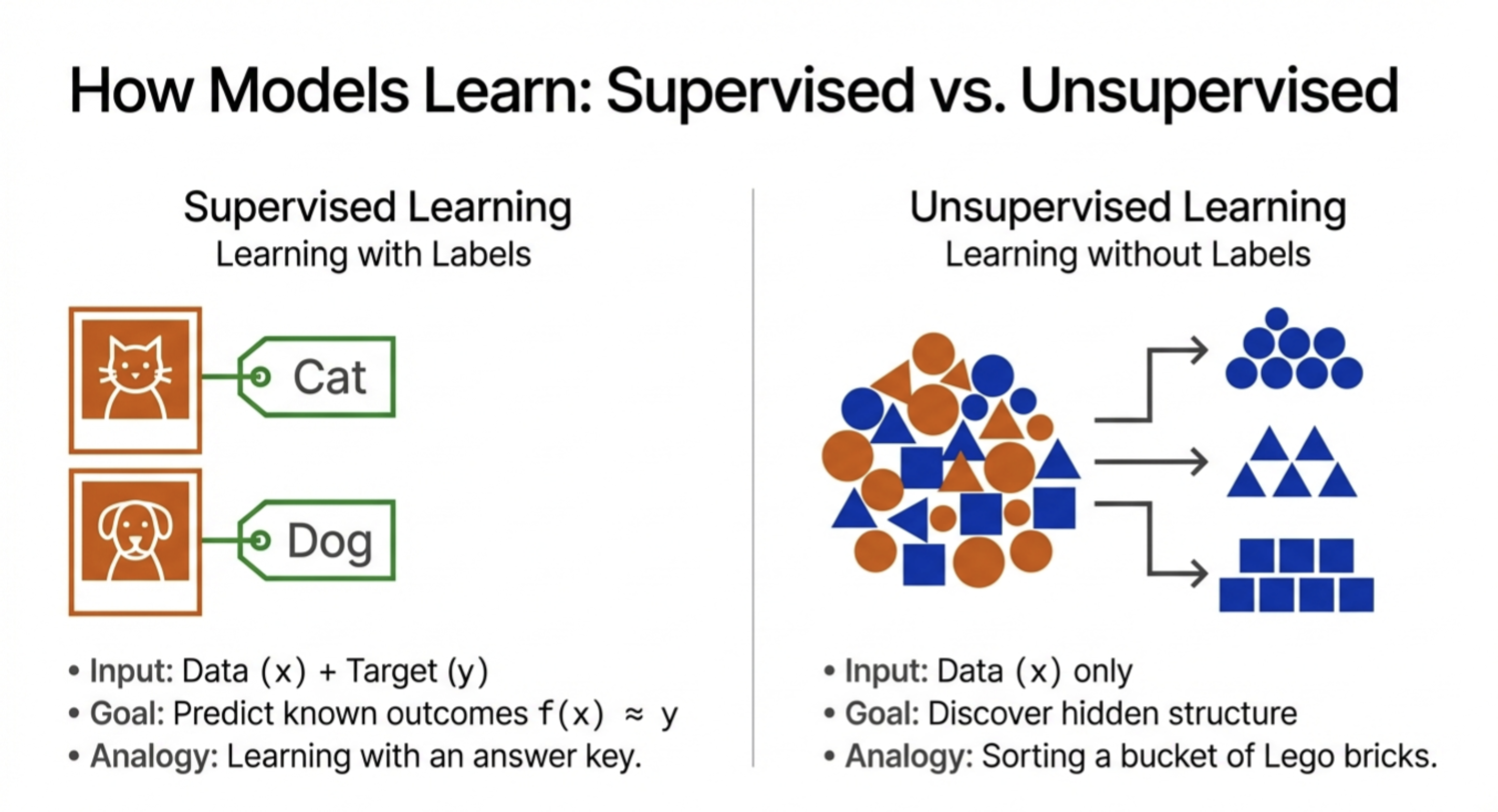
The most fundamental distinction is between:
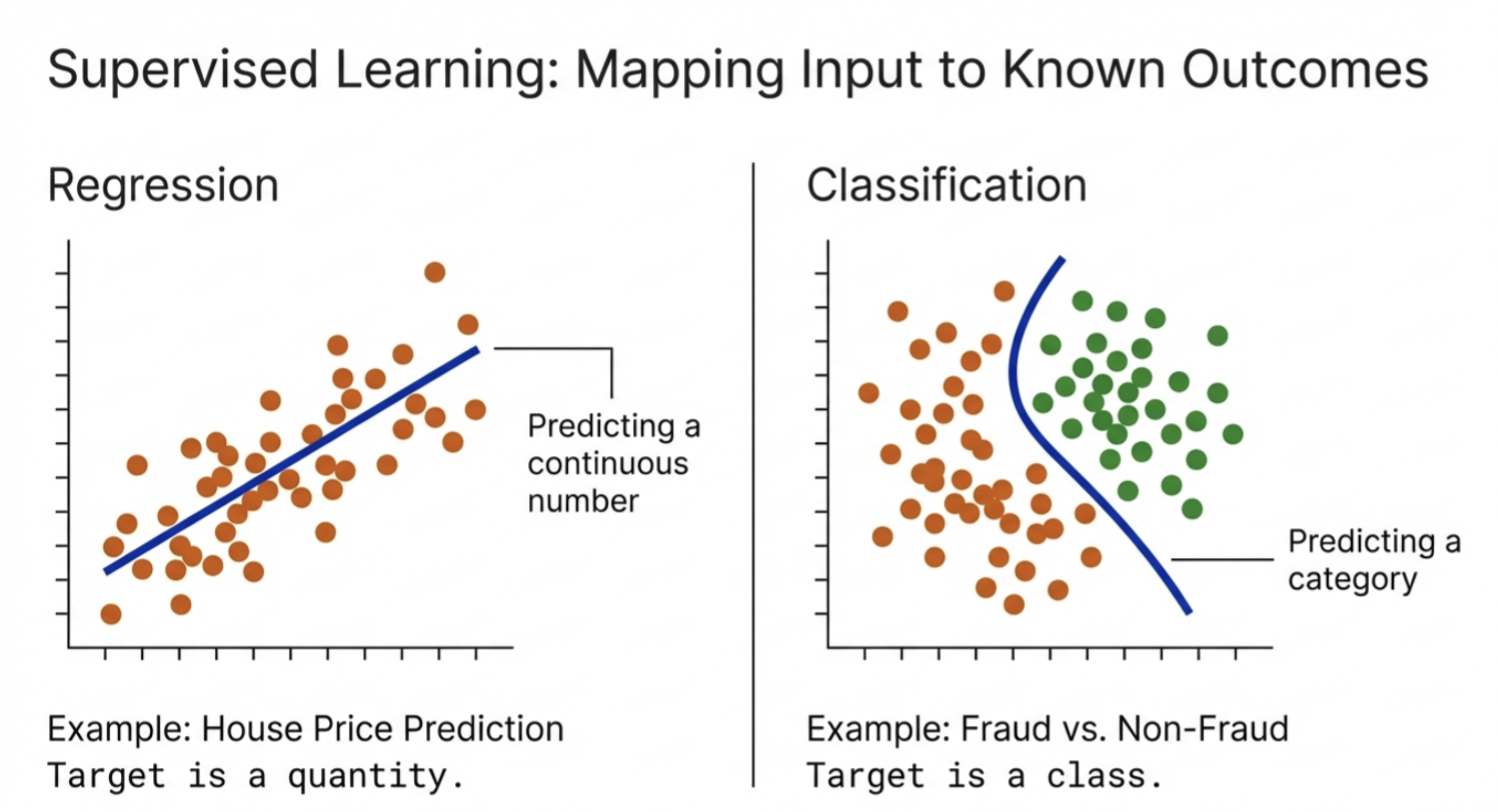
In supervised learning, we train a model using historical examples where the correct answer is known.
Each training example contains:
The model learns:
f(x)≈y
Common supervised tasks include:
We know the sale prices of homes in the past.
We train a model on labeled data:
Then we predict prices for new homes.
We know which transactions were fraudulent.
The model learns patterns that separate: fraud and non-fraud
Supervised learning is the most common form of machine learning in business because organizations often have historical outcomes.
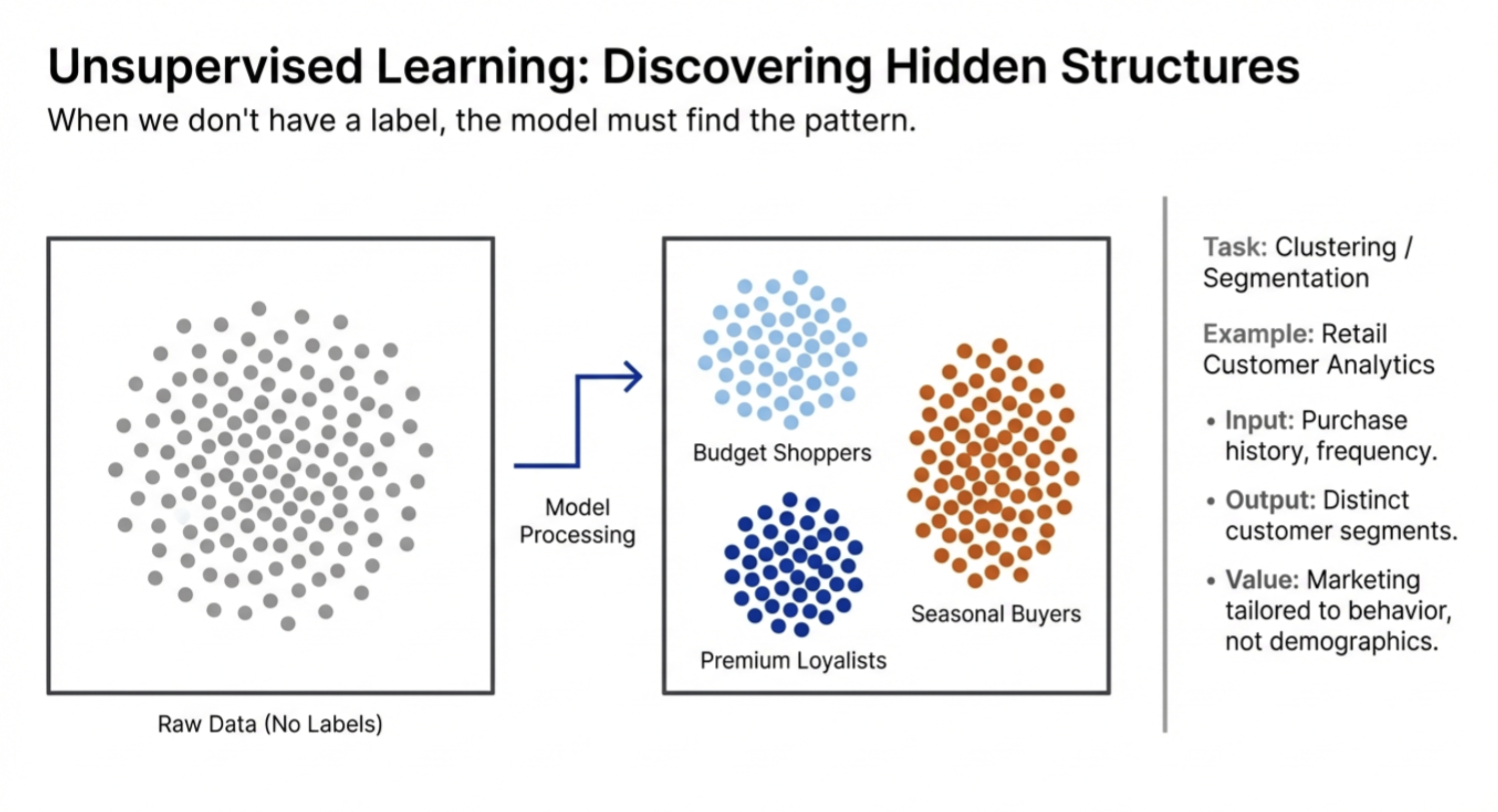
In unsupervised learning, we do not have a target label y.
Instead, the goal is to discover structure in the data.
The model learns patterns such as:
Suppose we have customer data:
But we do not have a label like “high value” or “low value.”
Instead, we want the model to group customers into segments:
This is unsupervised learning.
It does not predict a known outcome. It reveals structure.

One of the most common confusions in machine learning is mixing up algorithms and models.
They are not the same.
An algorithm is the learning procedure.
Examples:
An algorithm describes how learning happens.
A model is the result of learning.
It is the trained function f(x) that makes predictions.
Example:
So:
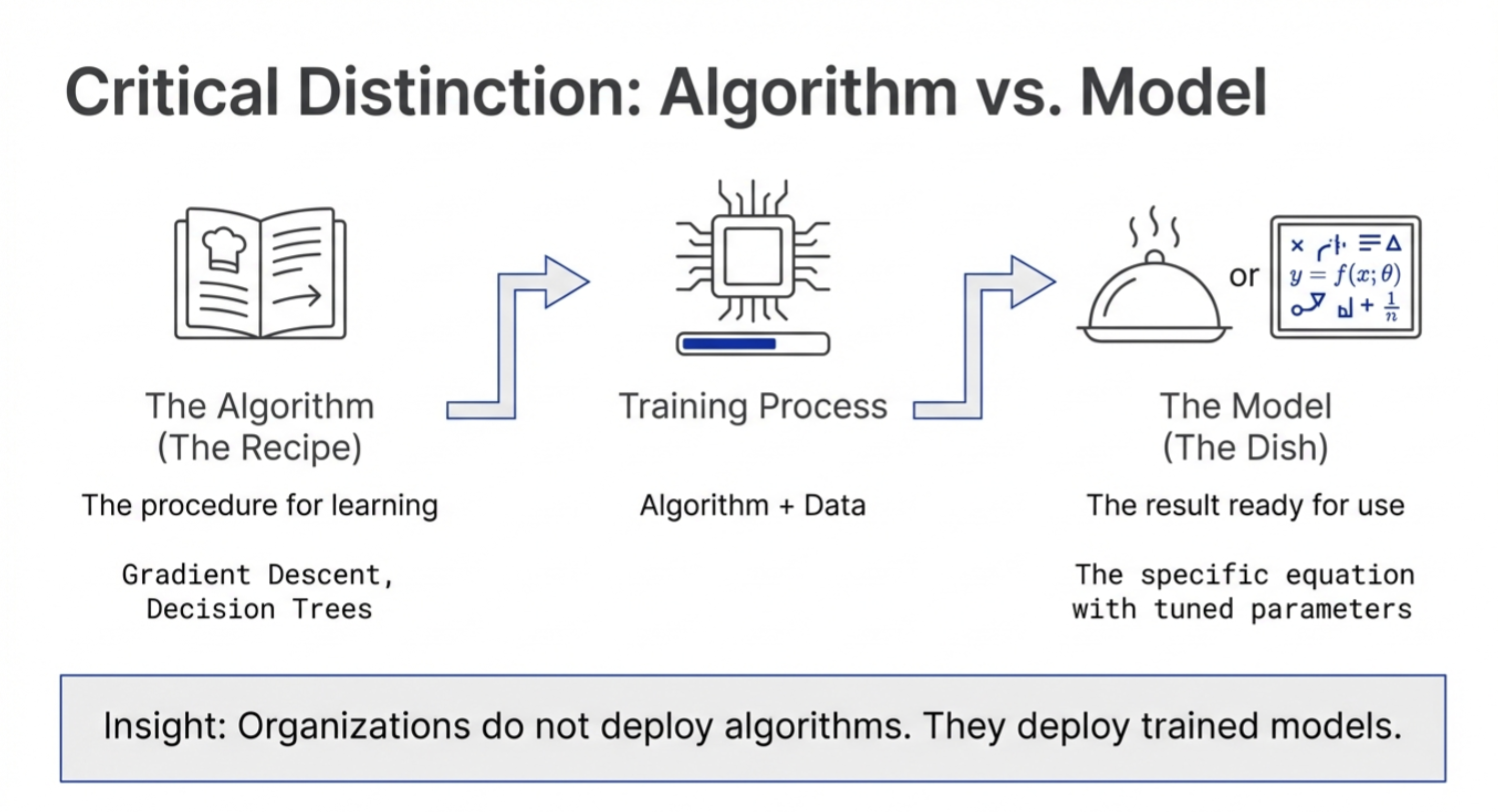
In organizations, teams rarely deploy “an algorithm.”
They deploy a trained model:
Thus, models are operational assets, not abstract algorithms.
Let us connect these concepts through two real business problems.
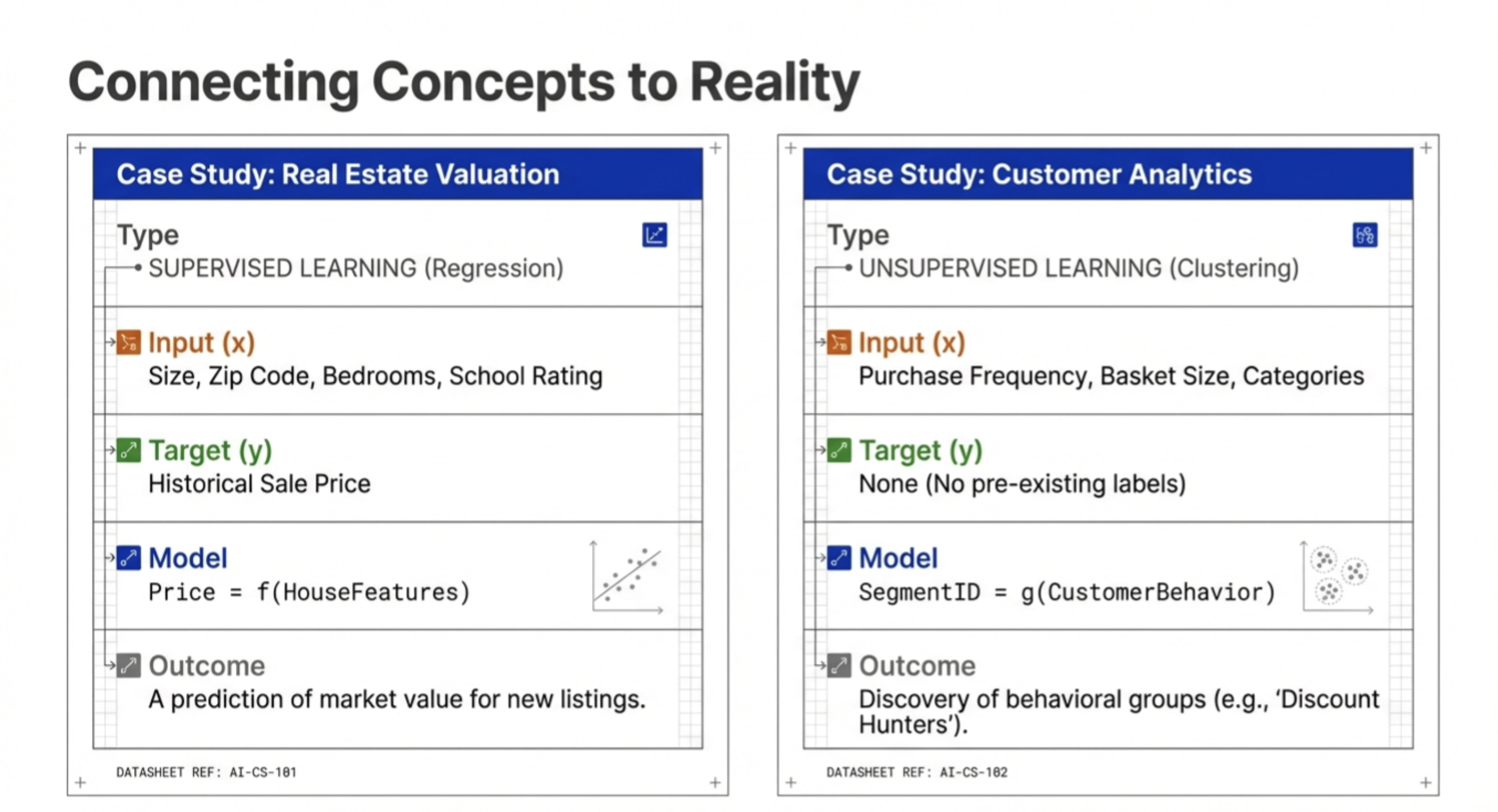
A real estate company wants to estimate sale prices before listing.
Inputs:
Output:
This is supervised learning because the historical sale prices are known.
The model is:
Price=f(HouseFeatures)
A retailer wants to understand customer types.
Inputs:
Output:
This is unsupervised learning because there is no single “correct label.”
The model is:
ClusterID=g(CustomerBehavior)
Here, the goal is insight and structure, not prediction.
A machine learning model is not valuable because it is mathematically sophisticated.
It is valuable because it becomes part of a decision system.
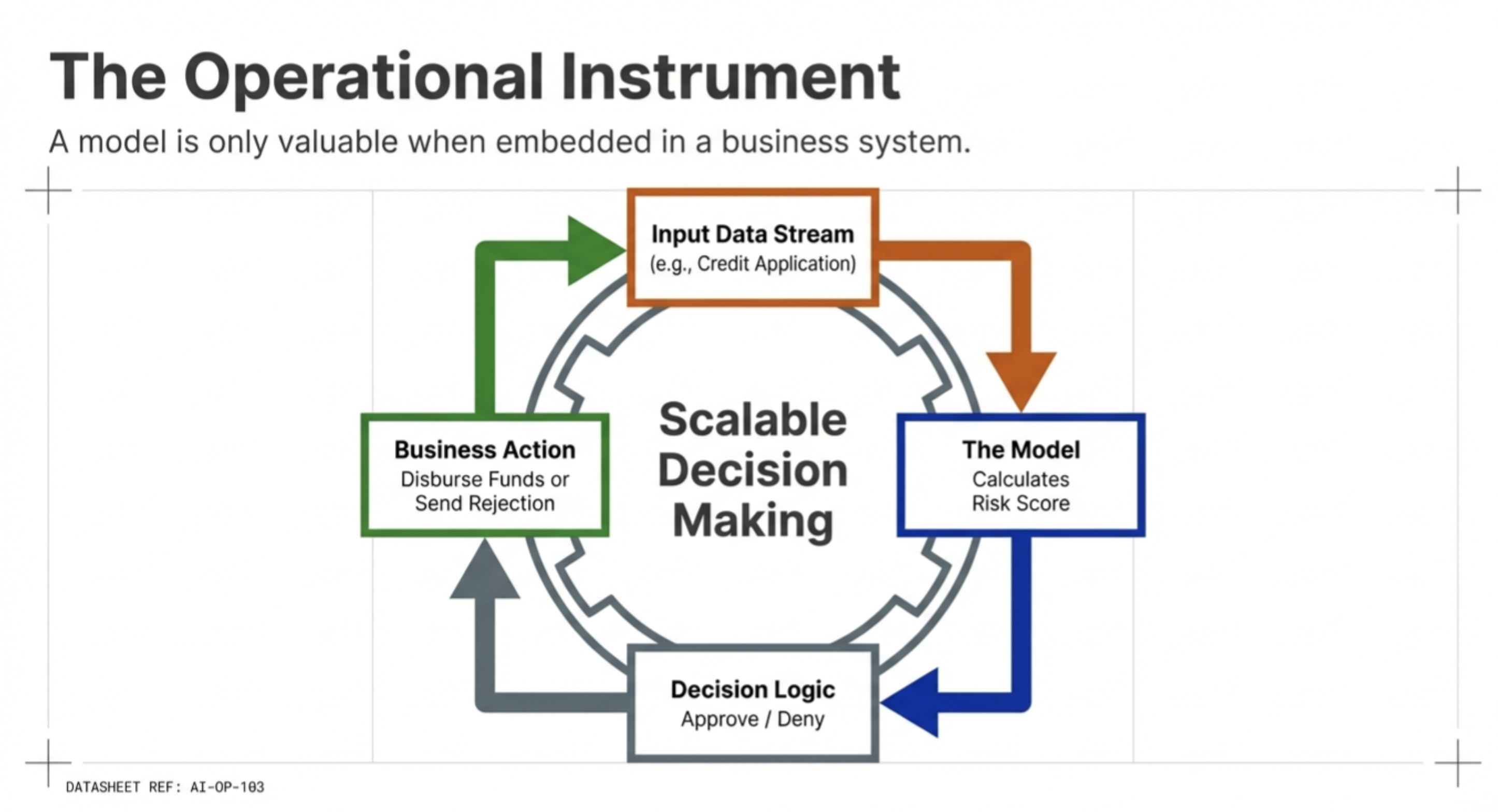
In organizations, models typically sit inside workflows such as:
The model output influences actions.
Therefore, the true role of a machine learning model is:
To convert historical data into repeatable, scalable decisions.
A model is not an academic object.
It is an operational instrument.
In this chapter, we established the foundational definition of a machine learning model:
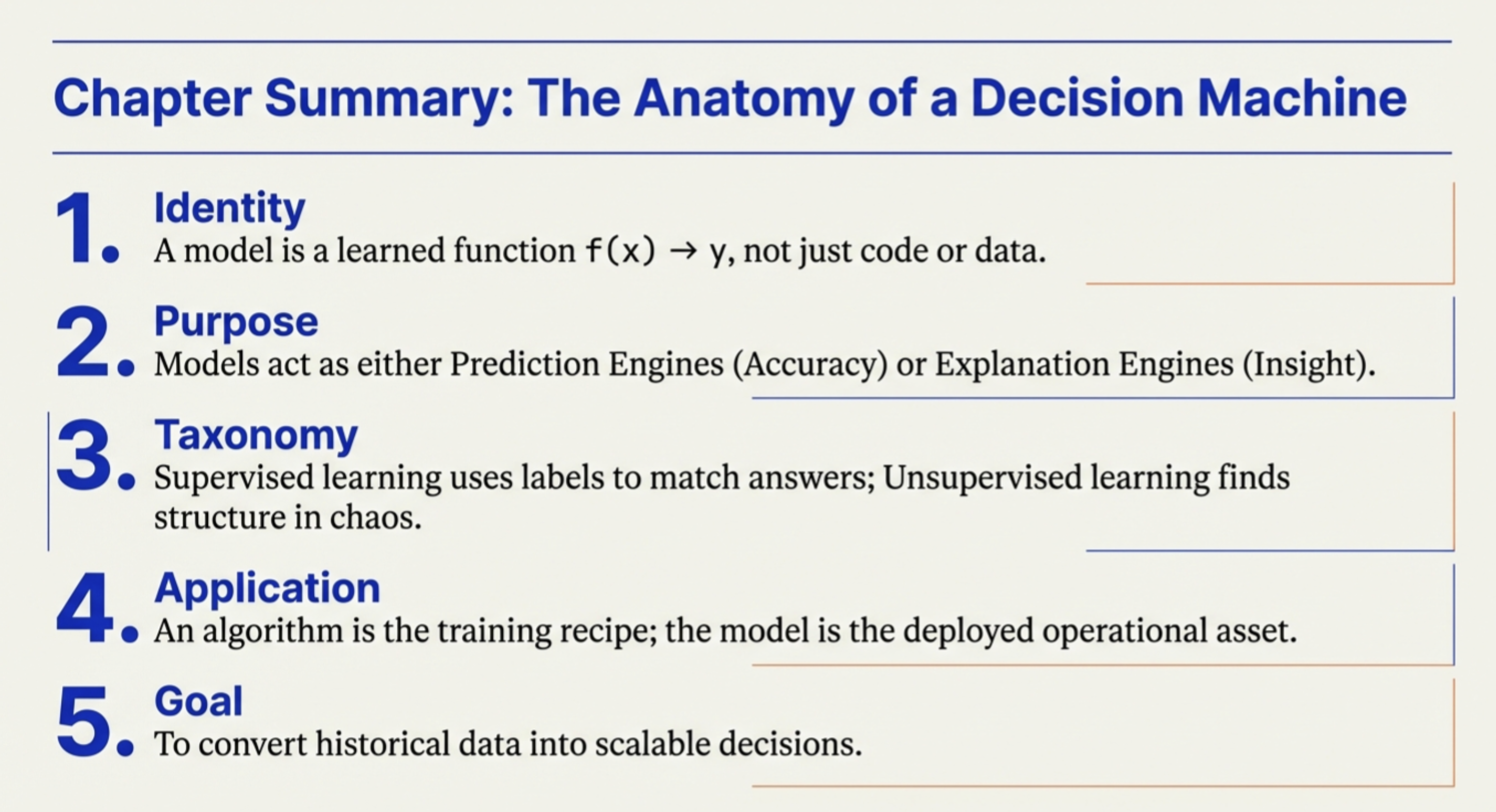
After completing this chapter, you should be able to explain clearly:
In the next chapter, we will explore the major categories of machine learning problems in more detail:
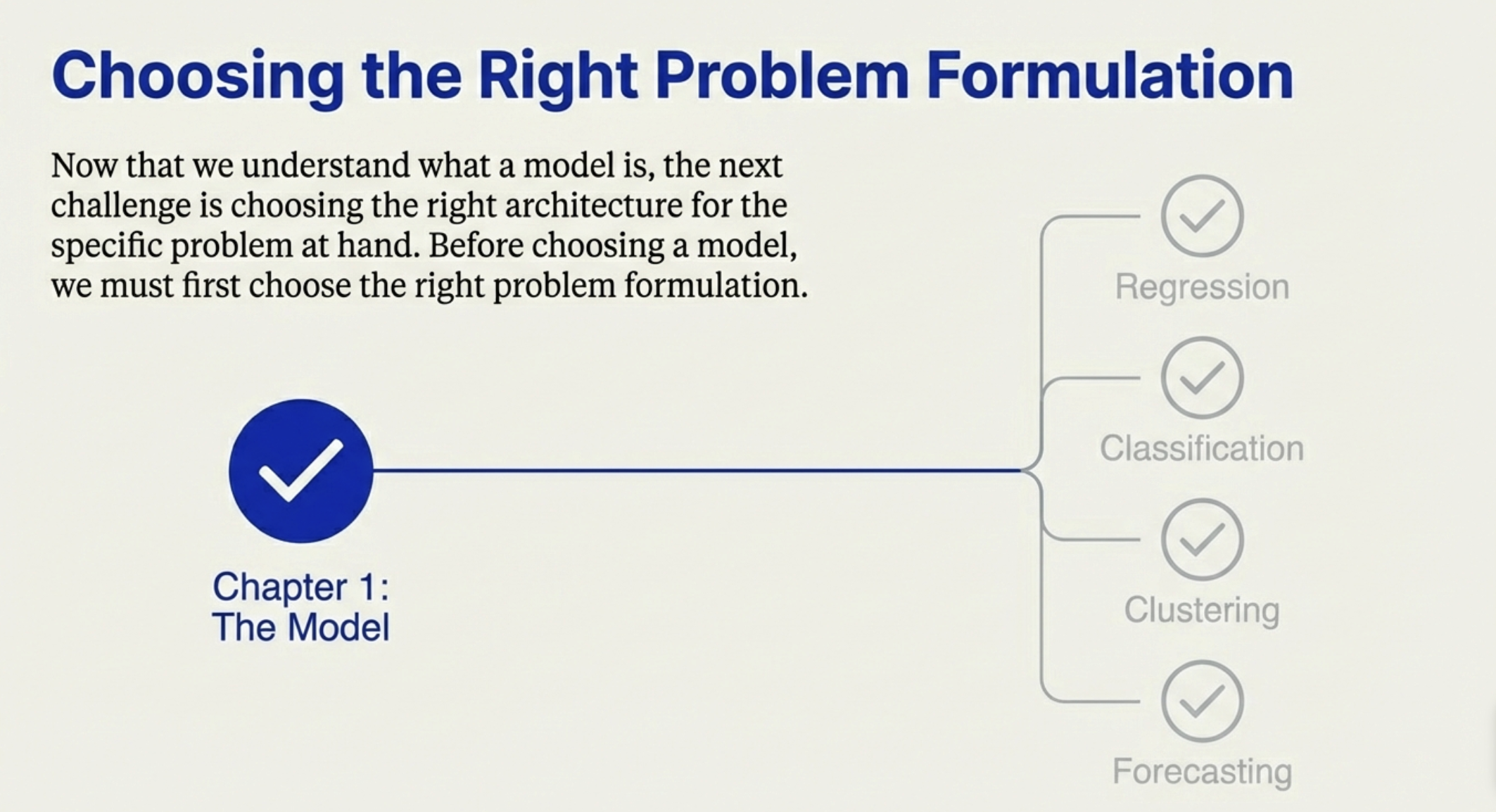
Because before choosing a model, we must first choose the right problem formulation.





.webp)