Why AI tools aren’t moving the profit needle and why the real leverage lives between them
Summary.
Despite record AI spend across the enterprise in the past two years, most CFOs have seen little corresponding improvement in profitability, and this piece explains why. The core argument is that most AI tools optimize isolated vertices, individual tasks like drafting emails or categorizing expenses, while the real value in any business lives on the edges, the handoffs between functions where delays, rework, and margin leakage actually accumulate. It contrasts task-level automation with system-level orchestration, arguing that enterprises need tools that manage how work flows between steps rather than just accelerating any single step in isolation. The piece introduces Neuto AI's edge-first approach, which focuses on coordination problems, financially bounded decision-making, and system-level metrics like end-to-end cycle time and cost per resolution rather than task speed. It closes by arguing that the next generation of AI winners will be measured by their impact on the P&L, not by how autonomous or general their agents appear.
Key Takeaways
Key Takeaways
Despite record AI spend, most CFOs have seen little corresponding profitability lift because most tools optimize isolated tasks rather than the handoffs between them.
Real value lives on the edges where work moves between functions, not at the vertices where individual tasks get automated.
CFOs report a consistent pattern: tools that made people faster without removing any actual work or changing headcount.
Neuto AI's edge-first approach focuses on orchestration, financially bounded decision-making, and system-level metrics like cost per resolution rather than task speed.
The next wave of AI winners will be judged by measurable P&L impact, not by how autonomous or general their agents appear.
Introduction
For the last two years, the enterprise AI market has followed a familiar pattern. A new tool launches. It promises to automate a specific task: sales emails, support replies, invoice parsing, demand forecasts. Enterprises buy it. Pilots run. Dashboards light up. Usage grows.
And yet, when CFOs look at the numbers, profitability barely moves.
This disconnect is becoming harder to ignore. Despite record AI spend, most organizations have not seen meaningful margin expansion. Costs have shifted. Complexity has increased. But operating leverage remains elusive.
The problem is not that these tools do nothing. The problem is where they operate.
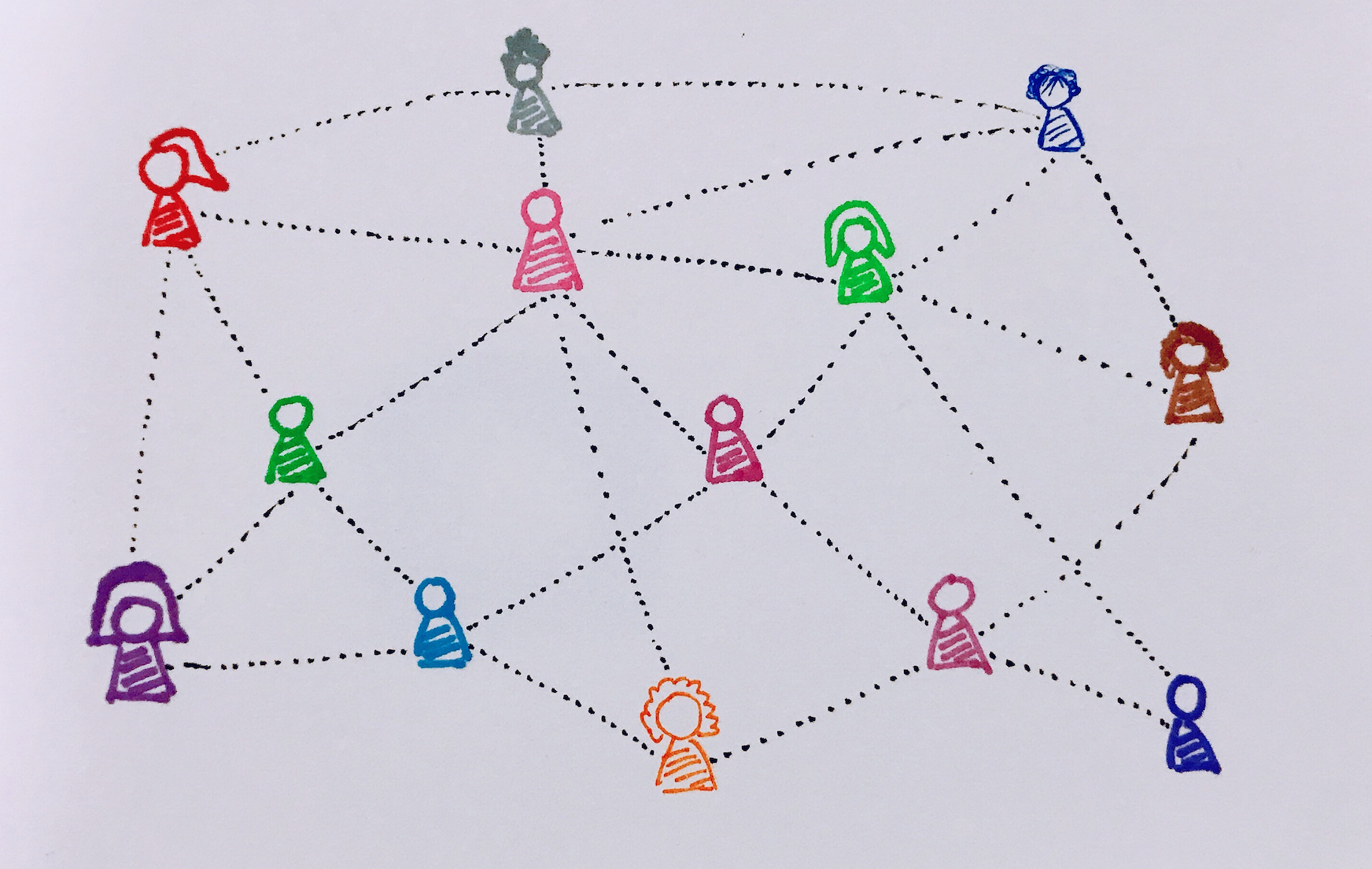
The market optimized for vertices. Businesses run on edges.
Most AI tools are built to optimize vertices, discrete functions inside an organization:
A sales tool that drafts emails
A support bot that answers FAQs
A finance tool that categorizes expenses
A forecasting model that predicts demand
Each tool improves a local task. Each has a compelling demo. Each can show efficiency gains in isolation.
But enterprises are not collections of independent tasks. They are systems.
Value is not created at the vertices. It is created on the edges, where work moves from one function to another.
Examples:
When a lead moves from marketing to sales
When an order moves from sales to fulfillment
When a customer issue moves from support to finance
When demand signals move from forecasting to procurement
When exceptions move from automation to humans
This is where delays, rework, errors, and margin leakage accumulate.
And this is precisely where most AI tools stop.
Why CFOs don’t see profitability lift
CFOs are not confused about AI’s potential. They are confused about its economic conversion.
From finance’s perspective, the pattern looks like this:
Tools improve task-level efficiency
But headcount doesn’t change
Cycle times don’t collapse end-to-end
Exceptions still escalate manually
Accountability remains fragmented
Costs become more variable, not less
In other words, local optimization without system-level impact.
One CFO put it bluntly in a recent conversation:
“We bought tools that made people faster. We didn’t buy anything that removed work.”
This is why AI spend often shows up as:
higher software costs
higher cloud costs
more integration overhead
…but not as margin expansion.
The missing layer: orchestration, not automation
Most AI products are automation tools. They replace or accelerate a step.
What’s missing is orchestration, the ability to manage how work flows between steps, functions, and systems.
Edges are messy:
They involve handoffs
They require policy decisions
They surface exceptions
They span multiple systems of record
They often lack a clear owner
Optimizing edges means answering harder questions:
What should happen next?
Who is accountable?
Is this allowed under policy?
What is the cheapest safe action?
When should we escalate?
When should we stop?
These are not single-tool problems. They are coordination problems.
Where Neuto AI comes in
Neuto AI is not another point solution. It is built specifically to operate on the edges.
Instead of asking, “How do we automate this task?” Neuto asks, “How does work move through the system, and where does value leak?”
What Neuto AI does differently
Edge-first design Neuto AI focuses on transitions: between teams, systems, and decisions. That’s where latency, cost, and risk accumulate, and where ROI is unlocked.
Outcome orchestration, not task automation Neuto doesn’t just generate outputs. It plans, coordinates, and executes multi-step resolutions across tools and workflows, with explicit ownership and verification.
Financially bounded decision-making Every action operates within policy constraints, cost ceilings, and escalation rules. Autonomy is constrained by economics, not demos.
System-level metrics Instead of measuring task speed, Neuto measures:
end-to-end cycle time
cost per resolution
rework and escalation rates
margin impact across the flow
These are metrics CFOs recognize, and fund.
Why edges unlock real efficiency
When edges are orchestrated:
Work stops bouncing between teams
Exceptions are handled once, not three times
Humans engage only where judgment is required
Decisions are consistent, auditable, and repeatable
Cost variability collapses
This is when AI stops being a productivity layer and starts becoming operating leverage.
Not because any single task is dramatically faster, but because the system stops leaking value between tasks.
The next phase of enterprise AI
The market is already shifting.
Budgets are tightening. CFO scrutiny is increasing. AI tools that optimize isolated functions will struggle to justify renewals unless they tie into system-level impact.
The next wave of winners will not be:
the most general models
the most autonomous agents
or the flashiest demos
They will be the systems that:
reduce end-to-end cost
enforce accountability
change how work flows
and show up clearly in the P&L
That is the bet Neuto AI is making.
Because in enterprises, efficiency is not found at the vertices. It lives on the edges.
Subscribe to our newsletter
Subscribe our newsletter to get the latest news and updates!






.webp)